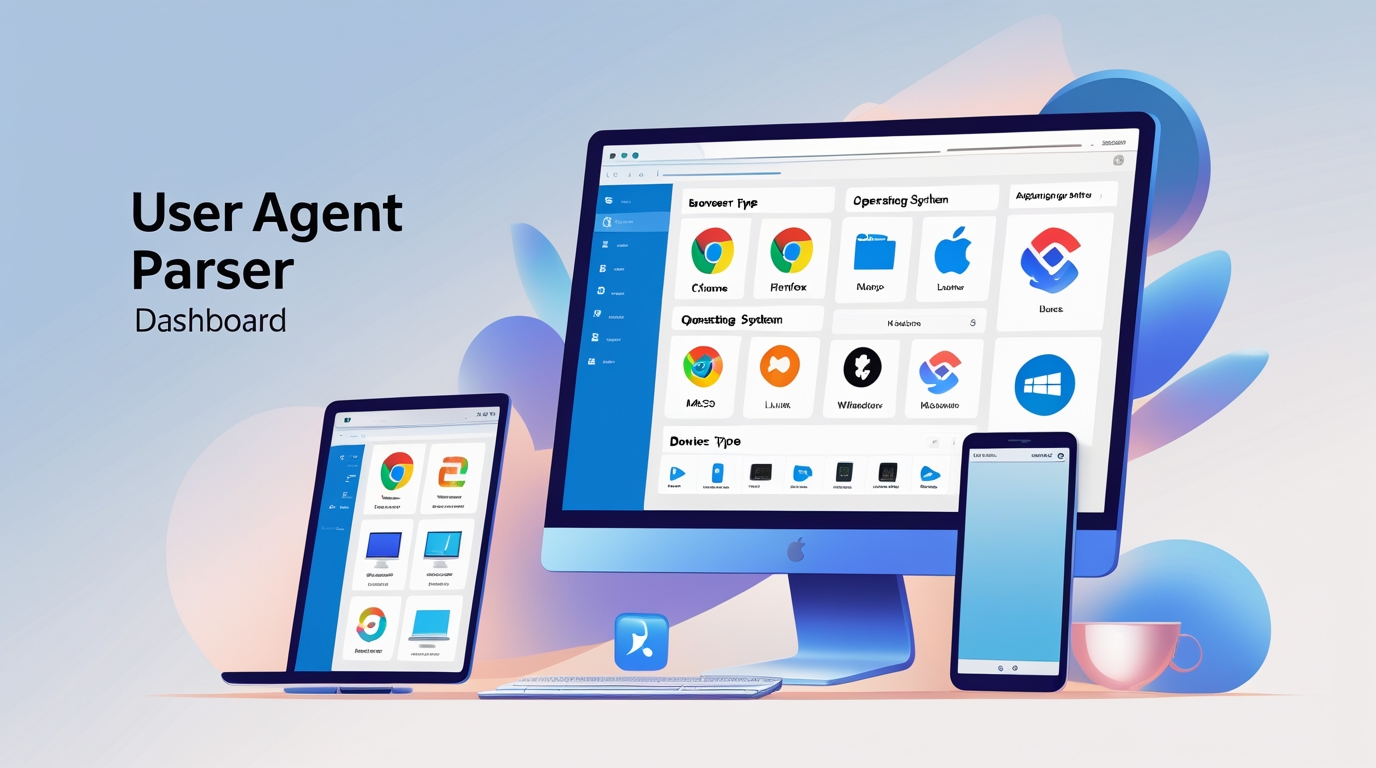
User Agent Parser: Decode Visitors’ Devices & Browsers Easily
Created on 9 November, 2025 • Developer tools • 58 views • 2 minutes read
Discover how a User Agent Parser helps your website identify visitor devices, browsers, and operating systems to enhance performance, user experience, and security.
In today’s digital world, understanding your website visitors is more important than ever. One of the best ways to do this is by using a User Agent Parser. This simple yet powerful tool helps websites identify details about users’ devices, browsers, and operating systems. In this article, we will explore what a User Agent Parser is, why it is essential, and how it benefits your website.What Is a User Agent Parser?
A User Agent Parser is a software tool that reads and interprets user agent strings sent by a visitor’s browser. Every time someone visits a website, their browser sends a user agent string containing information about their device, operating system, and browser type.
By using a parser, websites can break down this string into easy-to-understand data. For example, it can tell whether the visitor is using a mobile phone or a desktop computer, which browser they prefer, and even their operating system version. This data is vital for website optimization and improving user experience.
Why Do Websites Need a User Agent Parser?
Firstly, websites today face a wide range of devices and browsers. Therefore, adapting your website for each visitor is crucial. With a User Agent Parser, websites can:
Optimize content display: Ensure your website looks perfect on every device.
Improve website speed: Serve lighter content for mobile users, reducing load time.
Track user behavior: Understand which browsers and devices are most popular among visitors.
Enhance security: Detect unusual or suspicious user agents that may indicate bots or cyberattacks.
Without a parser, these tasks would be challenging and time-consuming. By accurately identifying devices and browsers, websites can offer smoother experiences and higher engagement rates.
How a User Agent Parser Works
The working process of a User Agent Parser is straightforward yet effective. First, it receives the user agent string from the visitor’s browser. Then, it applies predefined rules or algorithms to decode the string. Finally, it converts the raw string into meaningful data such as browser name, version, device type, and operating system.
For example, a user agent string like:
Mozilla/5.0 (Windows NT 10.0; Win64; x64) AppleWebKit/537.36 (KHTML, like Gecko) Chrome/116.0.5845.96 Safari/537.36
can be parsed to show:
Browser: Chrome
Browser Version: 116.0.5845.96
OS: Windows 10
Device Type: Desktop
This transformation is essential because raw strings are often long and confusing for humans to understand.
Benefits of Using a User Agent Parser
Using a User Agent Parser brings numerous advantages. Most importantly, it helps websites create a personalized experience for every visitor. Additionally, it supports marketing strategies by providing accurate analytics. Moreover, businesses can improve website performance and security by identifying outdated or suspicious browsers.
Furthermore, with the rise of mobile browsing, knowing which devices users prefer is crucial. By adapting content dynamically, businesses can increase conversions, engagement, and overall satisfaction.
A User Agent Parser is a powerful tool that every website should use. It helps decode user agent strings, provides detailed visitor insights, and enhances both website performance and user experience. By implementing a parser, businesses can optimize content, boost engagement, and protect their websites from potential threats.
Popular posts
-
-
-
-
-
DNS LookupChecker tools • 99 views